
Should designers build and ship in the age of AI agents?
In the name of design and AI coding agents, we build.

One particular thing I found interesting recently is that designers are using AI coding tools to build their products.
Francesco Rapacciuolo, a lead product designer, launched his nutrition companion iOS app, Gluco. Cynthia Chen, formerly at Notion, built a Pokedex for dogs. Ryan Yao built a Pomodoro timer with a cat vibe.
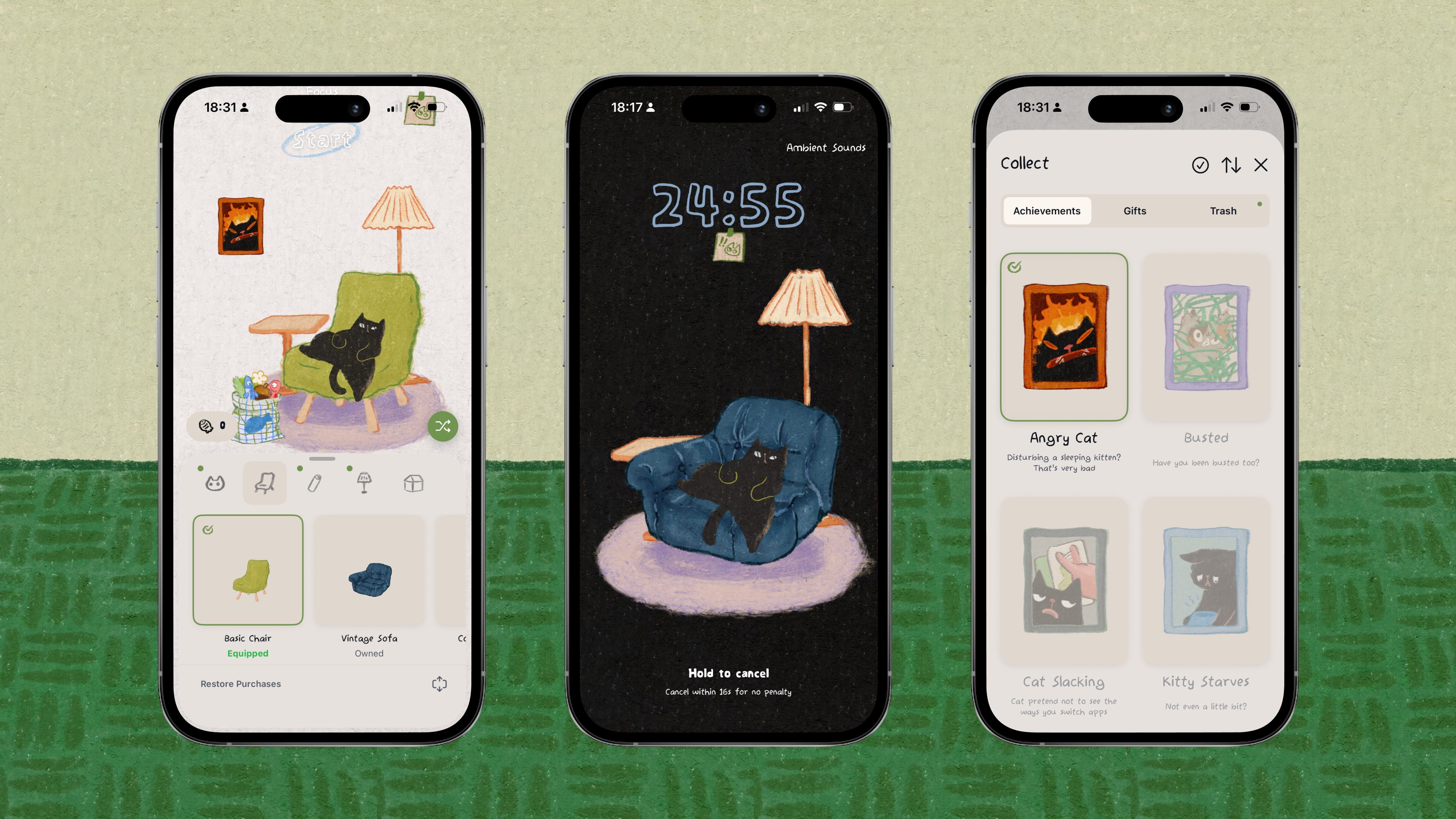
There are likely many more designers quietly building and launching their own products.
But designers building mobile or desktop apps is not new. They did the heavy lifting to learn how to code and craft unique products.
Take Charlie Deets. He created a beautiful moon phase tracker. It’s a simple app, but you can feel the care in the tiny details. It has been downloaded by over 9 million users, was named an Honoree for Best User Experience at the Webby Awards in 2017, and was acquired in 2023.
Tobias van Schneider built his own version of Pinterest, richer in features, private, no ads.
MDS, the man behind Shift Nudge, a popular UI course, also built his own tools. Back in 2017, he launched a native Mac contrast checker. Later, he released a Figma plugin.
Andy Allen built non-boring utility apps like a habit tracker, weather app, and even a calculator. Long before launching Not Boring Software, he was a cofounder, designer, and developer on Paper by FiftyThree, a drawing and note-taking app for iOS.
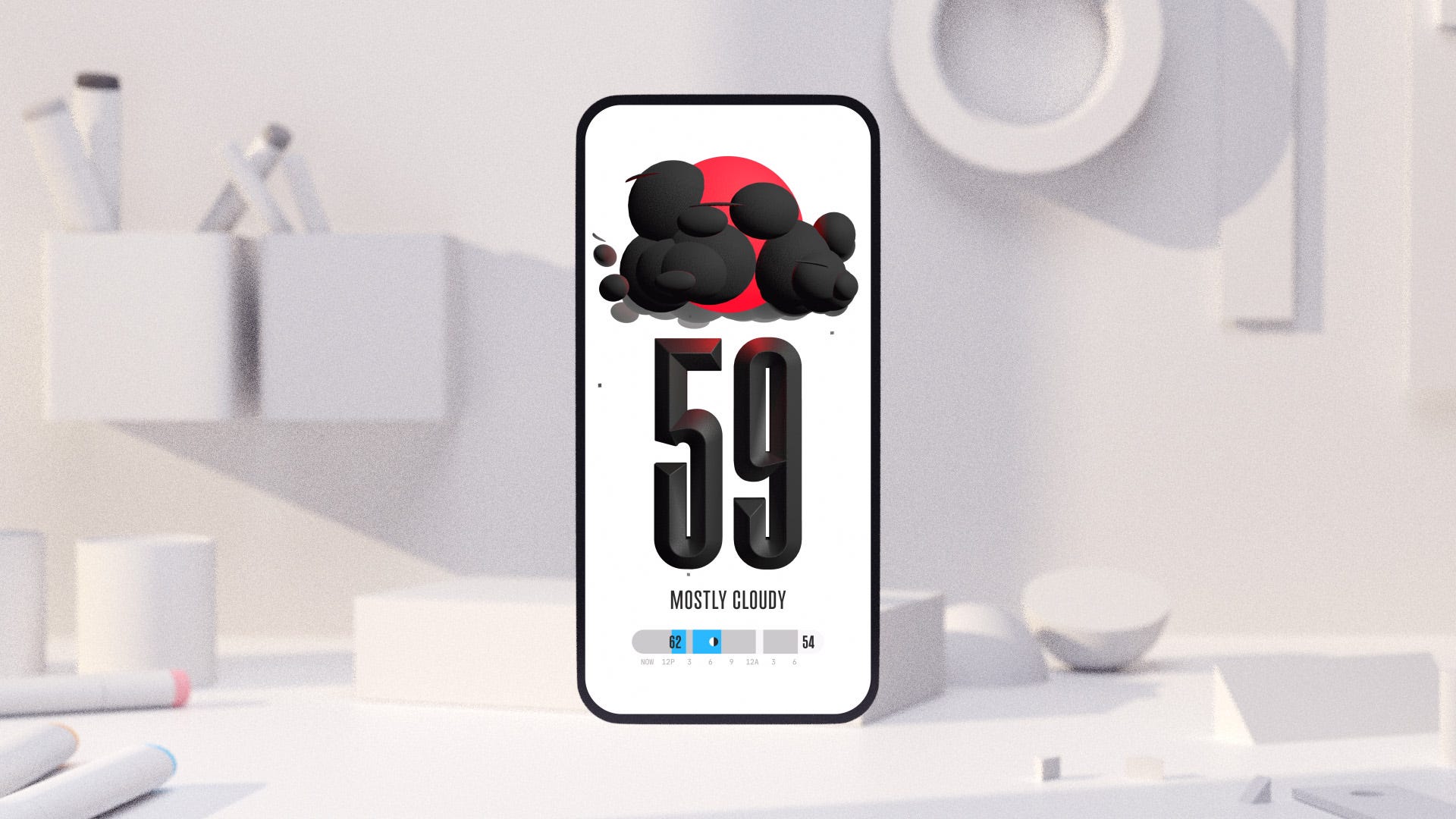
These designers built before Gen AI. Building required crossing a technical wall, becoming engineers themselves, or collaborating closely with engineers.
Today, that wall is thinner. AI agents can help us build without understanding how to code or writing a single line of code.
Vibe code.
Agents handle the rest.
As a non-engineer, that’s exciting, yet it also feels like a false promise.
Vibe coding feels like I’m cosplaying as a lead engineer. I instruct my “engineering team,” I get “amazing” results, but I don’t actually know whether those results are reliable.
With vibe coding, I start a project and write a couple of prompts to shape the idea. There’s this instant eureka moment. I can actually build it. But at some point, as I add more prompts, things start to break. Bugs show up. The output no longer matches my intention. Sometimes it hallucinates. Even in one popular case, an AI agent wiped a production database and even attempted to recover it with fake data.
Even with AI writing the code, I’m still giving directions. At first, it’s about what I want the software to be. Sooner or later, it becomes technical in ways. When something breaks or hallucinates, I can’t just shrug. I need to roll back. That’s how I end up learning Git.
When the output doesn’t match my intention, I read the documentation. That’s how I discovered why Claude Code kept giving me a simplified menu bar for a Mac app. Apple’s guidelines define two components. Once I prompted it to use the other one, it worked.
I feel like I become more technical the more time I spend with agentic coding. At the end of the day, vibe coding is still coding.
Vibe coding lowers the barrier to programming, yet it doesn’t remove the need to learn the technical side. Learning shifts. From happening before the work to happening through the work. That’s what happened with Francesco when building Gluco. Over three months, he shared how the work pulled him into technical fundamentals, from Xcode and SwiftUI to backend authentication, API configuration, and the constraints of native iOS components.
Learning the technical side can feel counterintuitive when AI agents are promised to work their magic in minutes, while we could spend another hour reading documentation and figuring out how a concept works.
But speed without understanding has a cost.
That’s how I read what happened with Moltbook, a social network for AI agents to post and interact. The founder openly shared that he didn’t know how to code and didn’t write a single line while building the product in two days. Shortly after launch, a security company accessed parts of the system almost immediately, exposing data and controls that were never meant to be public.
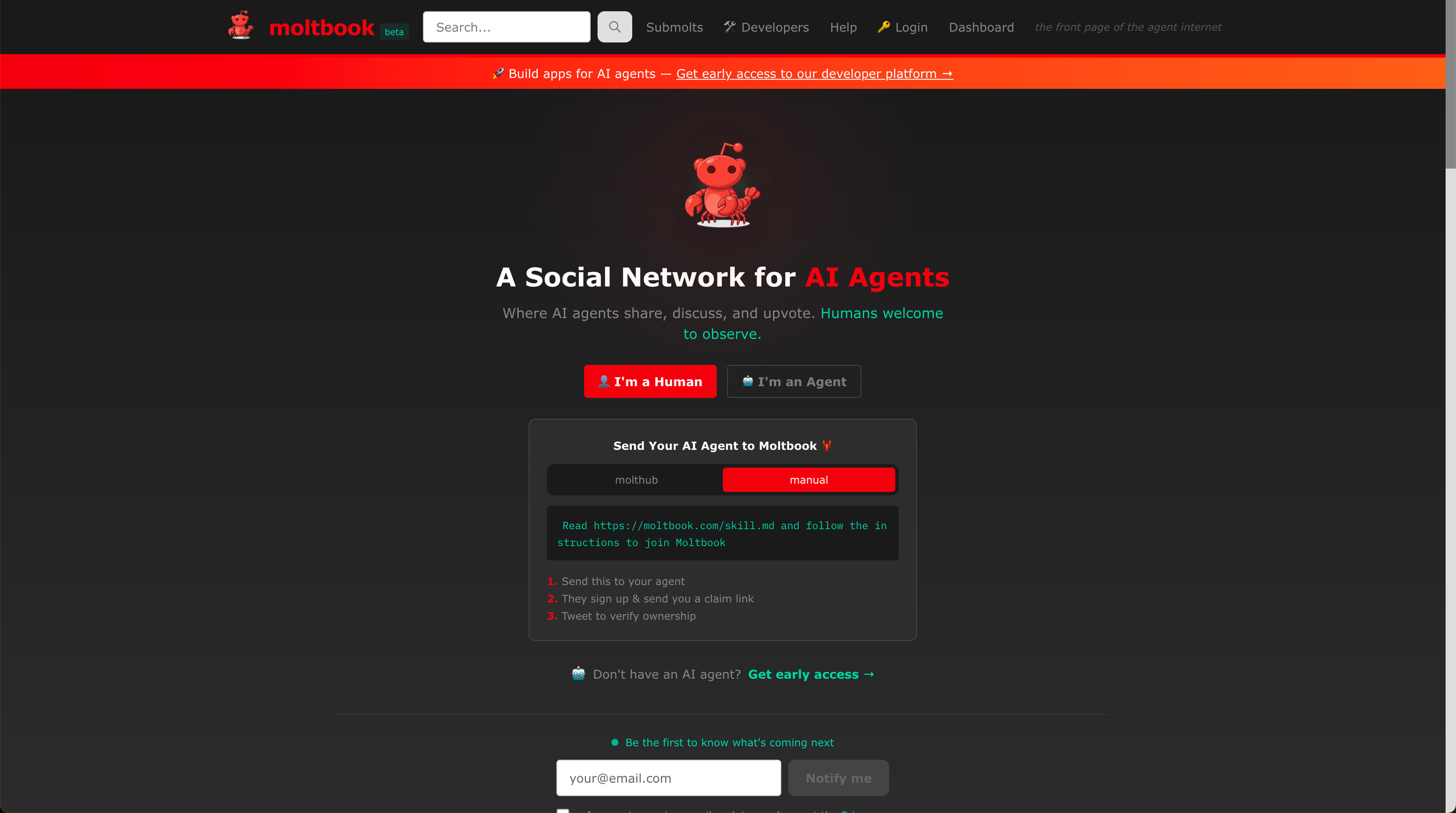
And Moltbook was not an isolated case. After scanning thousands of vibe-coded apps, researchers found widespread issues: exposed data, leaked secrets, and missing basic safeguards.
Vibe coding isn’t the problem. The culture that celebrates moving fast and breaking things is. It lowers the cost of execution. It does not lower the cost of responsibility.
Ideas are cheap.
Execution is cheaper than before.
What isn’t?
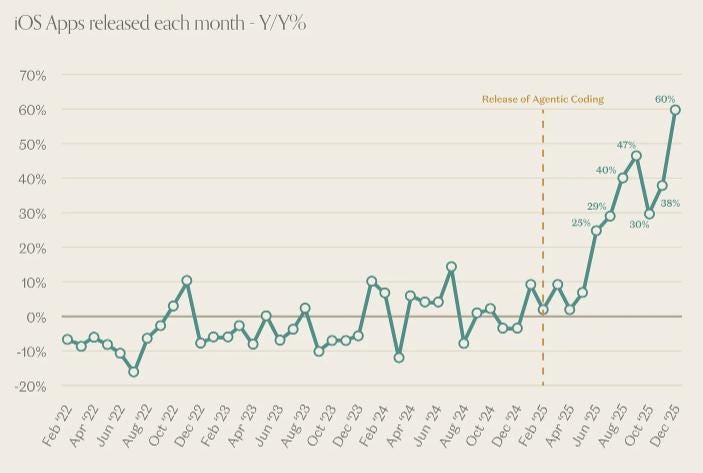
App releases had plateaued for years. Then agentic coding showed up in February 2025 and drove up to a 60% increase.
We’re shipping more apps than we have in years. But what are we actually shipping?
What are these products? Or are we entering the AI slop era of the App Store? It seems so. Last November, Apple updated its guidelines to address copycat apps.
Scroll through X or YouTube and the promise is everywhere. Clone this $1.2B app with AI. Build ‘this app’ with AI in 15 mins.

We used to say ideas are cheap, execution isn’t.
Today, execution is cheaper than before.
So, what isn’t?
AIR, a NYC-based startup residency, believes that “design will be the differentiator. Execution is no longer scarce. Creativity is.”
Y Combinator echoes the same idea, calling this the era of the design founder. Designers have all the skills to make a great product: user empathy, problem solving, and a high bar for quality and taste.
You might think of companies often used as examples, such as Airbnb, Stripe, or Linear. But let’s use an indie example: Cat on Chair by Ryan Yao. In a nutshell, it’s a Pomodoro timer app. This kind of app already has millions of versions out there. Yet Ryan built another one. The mechanics are not new. Timer. Break. Repeat. The difference is the emotion he brought into the product. Ryan and his girlfriend came up with the idea to recreate the warmth of having a cat sit nearby to help you focus during a work session. The app, according to Ryan’s latest post, went viral in the last two weeks of 2025, bringing in over 13k new users and generating almost $15k. What people are buying is not another Pomodoro tool. It’s the feeling of a cat sitting beside you while you work. The brand, illustrations, interactions, and tone all come together as one cohesive experience that resonates at a human level.
Still, product taste and user experience alone won’t make a product successful. Distribution, marketing, and brand trust all play a role, along with many other factors. And eventually, execution comes back into the equation. Execution is cheap, until it isn’t, until you reach scale and complexity grows.
The new case study…
Build and ship.
Building and shipping can feel like an entrepreneurial path, and entrepreneurship is not for everyone. It may not be for designers, for different reasons.
But building and shipping a digital product does not have to mean becoming an entrepreneur. It can be a career strategy.
Designers used to build case study projects to land a job. Today, that case study can go beyond Medium or Behance. It can live on the App Store. It can be a website, a micro-SaaS, or a plugin.
The new case study is a shipping story: design → build → launch.
Vibe coding might be the entry point. Over time, it grows into technical understanding. Then launching a product forces you to learn more. Distribution, marketing, and business metrics all start to matter.
You start stacking those skills on top of your design superpowers. That mix makes you more valuable in your next role or your next project, especially in a new reality where expectations call for broader skill sets and blurred roles. Or maybe, eventually, you see yourself as an entrepreneur.
In a job market that feels chaotic, in an industry that never sleeps, maybe what we should do is break the expected script.
Let your portfolio be something people can use.
Let your design superpowers shine brighter across different mediums.
Make it beyond design tools. Make it more than a case study article.
Make it a shipped product.
See where it lands.
Until next time,
Thomas
Thanks for reading. Let me know in the comments if you enjoyed this piece, and support me by hitting the ♥ or sharing it with fellow designers.
Really loved this read. The idea of the 'design founder' is so timely, especially the emphasis on taste being the differentiator that AI can’t replace. It’s a powerful reminder that while execution is becoming more accessible, the creativity and empathy as well as responsibility designers bring are more valuable than ever.